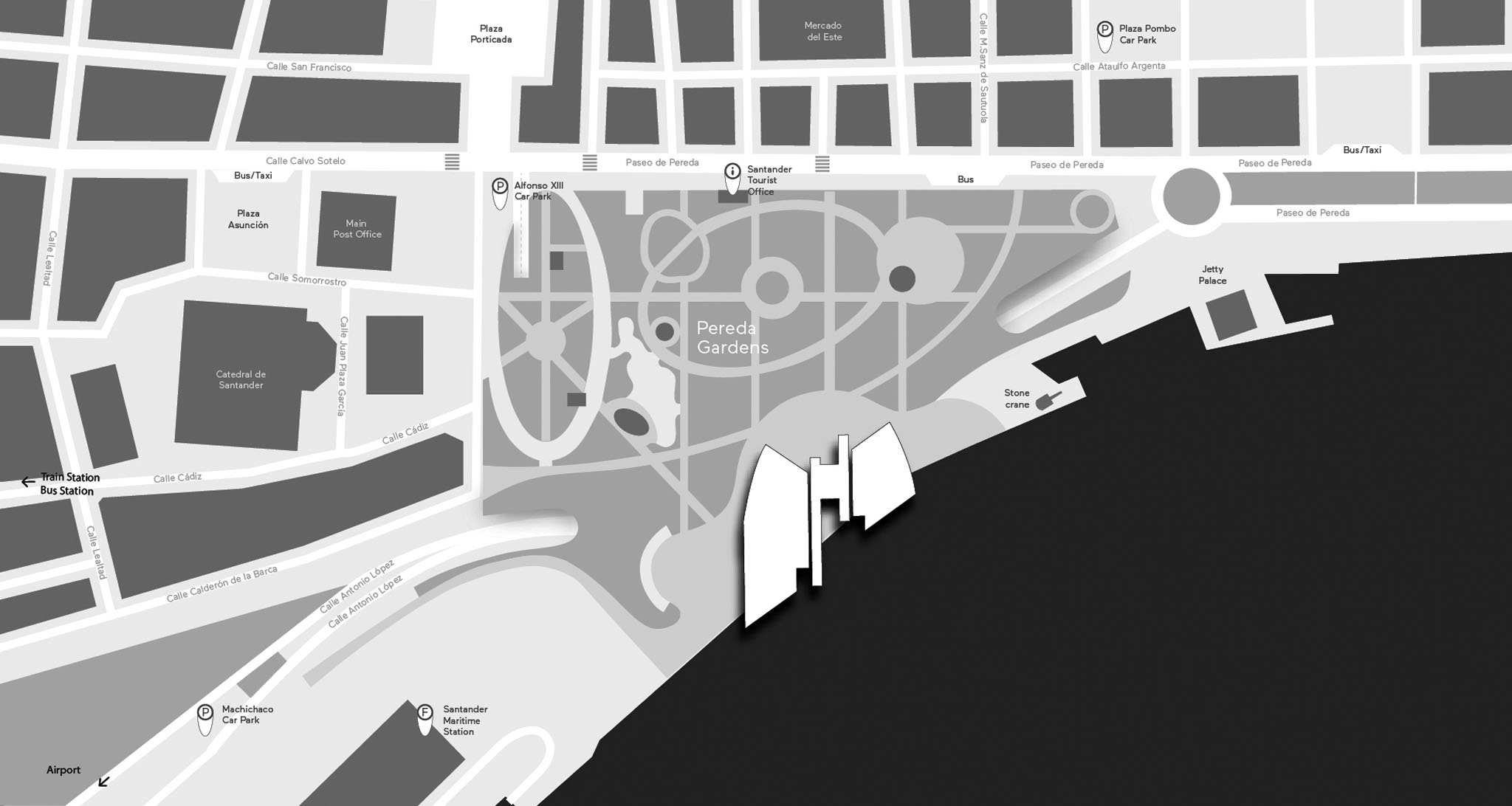
A cyanotype workshop led by Ellen Gallagher and Edgar Cleijne will be held at Fundación Botín – located in the in the historic port-city of Santander by the Cantabrian Sea, on the North coast of Spain – from the 11th to the 21th of July 2022.
Participants will have the opportunity to learn how to use cyanotypes, a 19th-century photographic process, to compose collaborative 16mm film sequences. It will explore the Cantabrian Sea as history, as site and as material as the participants immerse themselves in the surrounding bay of Santander.
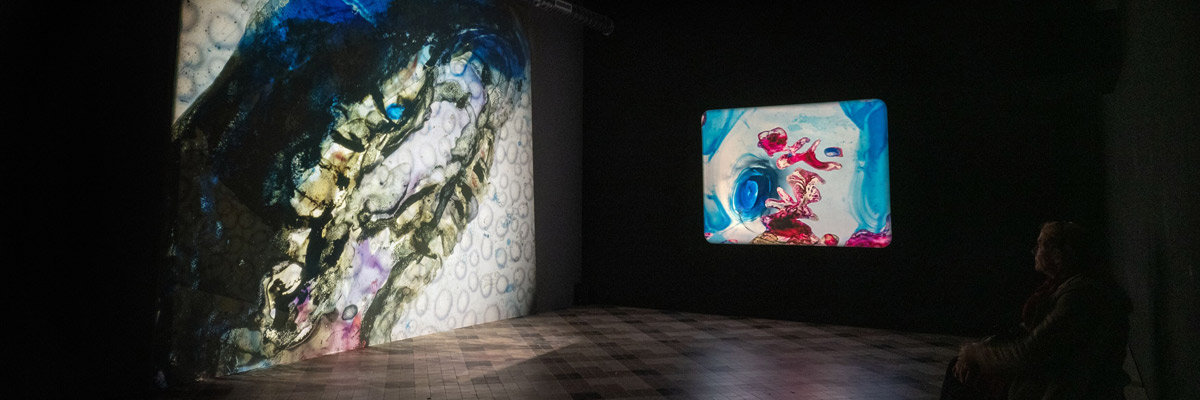
This workshop is bound to Centro Botin´s current exhibition Ellen Gallagher with Edgar Cleijne: A law… a blueprint… a scale, the first presentation in Spain by the American artist Ellen Gallagher including paintings, works on paper as well as three film installations created in collaboration with Dutch artist Edgar Cleijne. The exhibition proposes an active dialogue with the deep-sea waters and the organisms, stories and myths that inhabit them.
Ellen Gallagher
(Providence, Rhode Island, USA, 1965)
Encompassing painting, drawing, collage and celluloid based projections that fuse technique and material into syncretic form, her arresting compositions are a process of recovery and reconstitution through the accumulation and erasure of media, which results in palimpsestic and topographic surfaces that are often carved, inlaid, mounted, printed, blotted and inscribed.
Gallagher’s work is included in many major international museum collections including MoMA, New York; Albright Knox Art Gallery, Buffalo; The Metropolitan Museum of Art, New York; The Art Institute of Chicago; MCA Chicago; MOCA, Los Angeles; Philadelphia Museum of Art, New York; Whitney Museum of Art, New York; and Tate, London.
Edgar Cleijne
(Eindhoven, Netherlands, 1963)
He graduated from the Rotterdam Conservatory in 1990. His photography and film practice is focused on large-scale interventions in the urban landscape enforced by negotiations between the individual and the state. Concentrating on the individual choices that result in complex urban developments, Cleijne portrays the struggle to live and be represented within systems of official denial.
Merging the opposite ends of traditional and digital imaging, Cleijne looks at the effects of the Anthropocene in the crossing points of nature, culture and commons. This position is reflected in his filmic installations by creating an interweaving of space, image and sound.