Social and Emotional Education. An International Analysis. 2011

Presentation

In 2007 the Botín Foundation began this line of research with the aim of analysing, in collaboration with renowned experts, the state of social and emotional education in various countries. The results of this research, which analysed 21 countries in the subsequent years, have been made known via the dissemination of meaningful educational experiences which took place in these countries, published in various reports in 2008, 2011, 2013 and 2015 (click here to view them). This research contributes knowledge, know-how and innovative propositions for tackling the challenge that we never lose sight of: improving educational quality and wellbeing in childhood and adolescence through the holistic development of individuals.

In these reports you can also consult the latest research associated with the impact of social and emotional education, in studies carried out in the global and European spheres as well as at the local level, thanks to the results obtained from the educational programme implemented by the Botín Foundation in Cantabria.

Finally, the 2015 report presents the process that was carried out to create two tools designed by the Botín Foundation to measure emotional intelligence in adolescents (TIEFBA) and in children (TIEFBI) (each of these must take you to the application’s website).
More Less information

Images

Catalog results

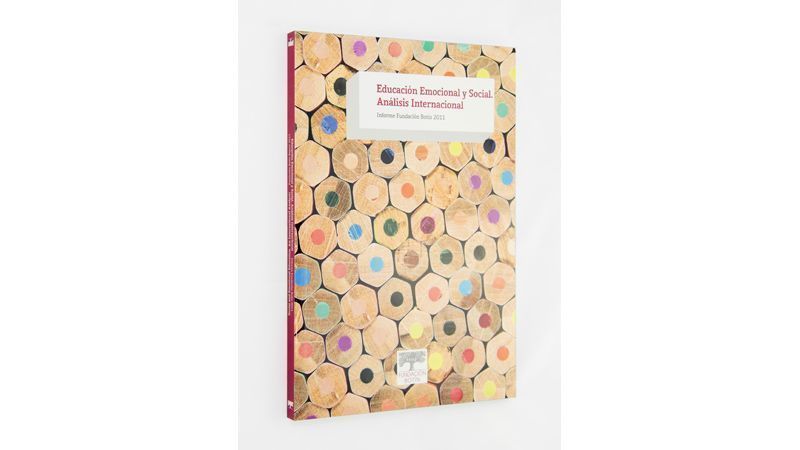
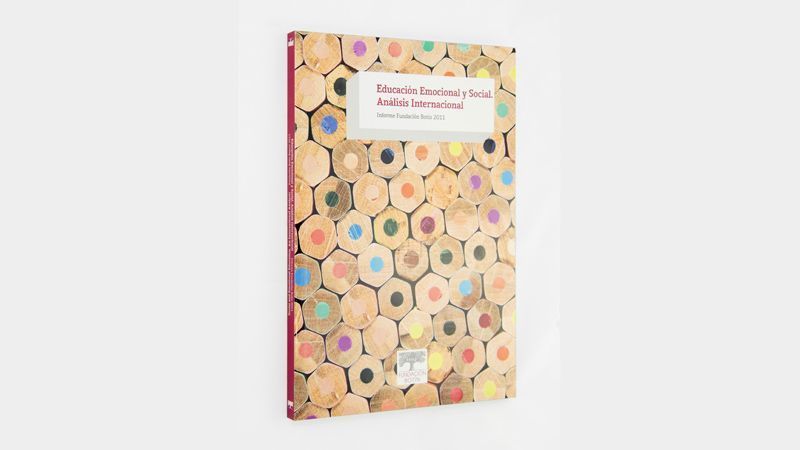
Emotional and Social Education. An International Analysis. Fundación Botín Report 2011.

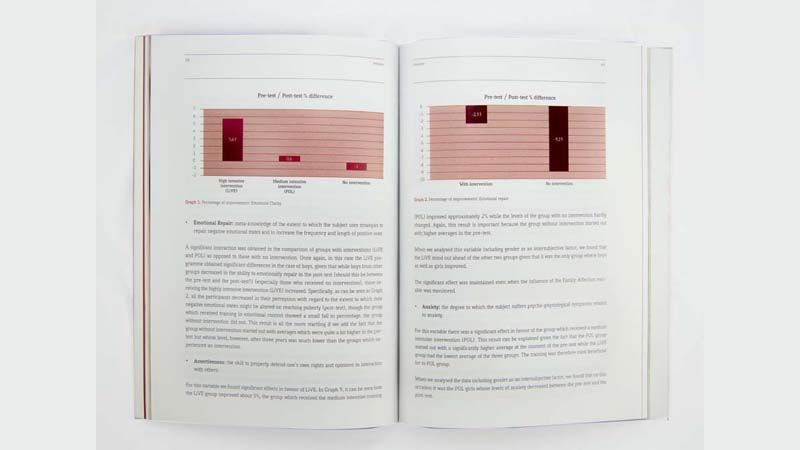
The second report, which consolidates the Botín Foundation’s work in the area of social and emotional education as a long-term applied research project consisting of knowing what is happening around the world and studying good practices in order to apply them in Spain in the educational areas in which the Botín Foundation works.

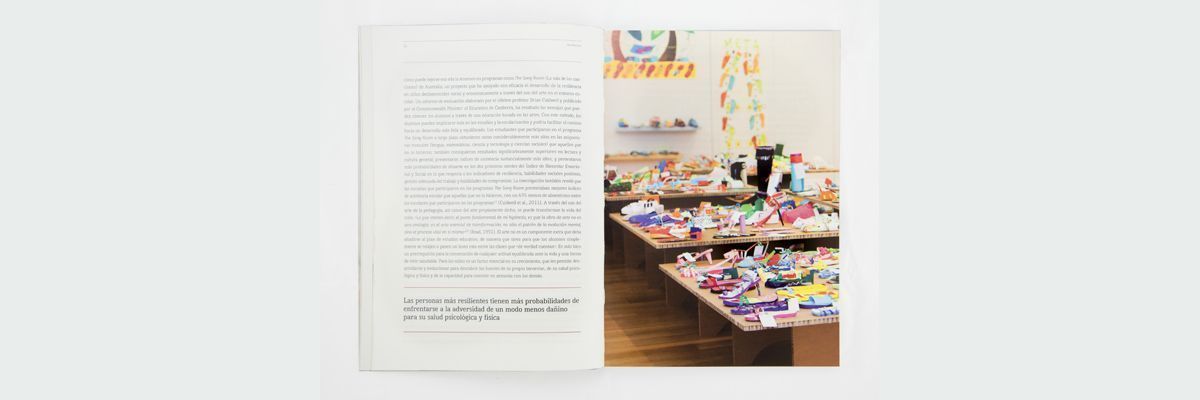
It features an introduction by Christopher Clouder, wherein he reflects on the need to educate our perspectives, as well as 5 chapters devoted to explaining the state of play in Australia, Canada, Finland, Portugal and Singapore. In addition, this second report’s final chapter relates the results of the process and the impact of implementing the Botín Foundation’s Responsible Education programme in educational establishments in Cantabria. The evaluation was conducted by professionals at the University of Cantabria (Spain).

Research's Responsables

Christopher Clouder

Christopher Clouder FRSA is a freelance speaker, writer and consultant on questions of childhood, innovation in education, cultural evolution and creativity. He was the founding director of the Botin Platform for Innovation in Education and has led international research into Social Emotional Education and Creativity and the Arts. He is a co-founder of the Alliance for Childhood, a member of the Learning for Well-being Community and the International Forum for Steiner Education. From 1991 to 2012 he was the founding CEO of the European Council for Steiner Waldorf Education.

Luisa Faria

Luísa Faria is an Associate Professor of Psychology at Faculdade de Psicologia e de Ciências da Educação, Universidade do Porto, Portugal. She has been based there since 1986, and lectures in the field of Motivational Psychology. She is the director of the Integrated Master Course in Psychology, and she was the leader of a Research & Development Project (supported by the Portuguese Foundation for Science and Technology, the Portuguese Ministry of Education, and European Union) on pupils’ personal conceptions of competence and achievement, and schools’ collective efficacy. She is the author of numerous books, chapters, reports and articles, in national and international journals, on Motivation, Intelligence and Psychological Evaluation.

Jennifer M. Gidley

Jennifer M. Gidley, PhD, is an Australian psychologist, educator and futurist. She is President of the World Futures Studies Federation (UNESCO & UN partner) with members in 60 countries. An Adjunct Professor at the Institute for Sustainable Futures (UTS), Sydney, she has held academic positions in Australian universities (1995-2012) and visiting professorships in Europe. Jennifer works globally including Europe, the USA, Middle East and Asia. She has published dozens of academic papers, several books and 

serves on several academic boards. Recent books: The Future: A Very Short Introduction (Oxford, 2017) and Postformal Education: A Philosophy for Complex Futures (Springer, 2016).

Marja Kokkonen

Marja Kokkonen (PhD, Psychology; MSc, Sport Sciences) is a Senior Lecturer at the Faculty of Sport and Health Sciences at the University of Jyväskylä, Finland. Her research interests include the socioemotional development in children and youth, the socio-emotional competence in coaching and school physical education, as well as psychological safety and discrimination in different educational and sporting contexts. As a certified clinical and sport psychologist, she also provides coach education, and sport psychology consultancy to coaches, athletes and teams. She is a former Treasurer in the European Federation of Sport Psychology.

Dennis Kom

Senior Guidance Specialist, Ministry of Education of Singapore. Helping children and adolescents to develop a holistic perspective has always been the main interest and purpose of their work. He began his professional career teaching chemistry classes and English to high school students and was gradually becoming more interested in the emotional and social development of adolescents. Therefore, formed as a consultant and eventually went to work in the department School and student support. Subsequently, he joined the guidance department of the Ministry of Education, which exerts different functions, such as resource development, systems and policies and provide advice and training schools to pave the way in the implementation of initiatives to promote emotional and social development of students. It is currently developing a PhD in Psychology.

Lucy Le Mare

PhD in Evolutionary and associate at the Faculty of Education at Simon Fraser University, Canada Professor Psychology. Her research focuses on processes of risk and resilience and school adjustment in both the general population and specific subgroups (children in care, children from international adoption or indigenous). Their studies underscore the importance of social relations and cultural-historical in the course of these processes context. Among the subjects taught in college courses highlight their socialization and social development of children in schools.

Javier Argos González

Javier Argos González has a doctorate in Education and is a tenured professor in the Educational Theory Department of the University of Cantabria. He is a member of the Theory, Innovation and Practice in Education (TIPE) Research Group in the Education Department at said university, and served at Dean and Vice Dean of the Faculty of Education for eleven years. He is currently Vice President of the School Board of Cantabria as well as an evaluator for the National Evaluation and Foresight Agency (ANEP) and the Quality Assurance Agency for the University System in Castilla y León (ACSUCYL). He is a member of the team that carries out the educational evaluation of the Botín Foundation’s Responsible Education programme.

Mª Pilar Ezquerra Muñoz

Mª Pilar Ezquerra Muñoz has a doctorate in Education and is a tenured professor in the Educational Theory Department at the University of Cantabria. She is currently Vice Dean of Undergraduate Studies and Students of the Faculty of Education at said university. She is a member of the Theory, Innovation and Practice in Education (TIPE) Research Group in the Department of Education at the University of Cantabria, as well as a member of the team that carries out the educational evaluation of the Botín Foundation’s Responsible Education programme.

M. Ángeles Melero

Ángeles Melero holds a doctorate in Psychology and is a civil servant professor in the Department of Education at the University of Cantabria, in the area of Developmental Psychology and Education. Her research interests have coalesced around two main areas: on the one hand, processes of written argument during pre-adolescence, and on the other, socio-emotional competence, resulting in various publications and research projects. Among those of her contributions that are directly related to the latter area, of particular note are those dealing with the psychological impact that socio-emotional skill programmes have on students in childhood and primary education, which were financed and sponsored by the Botín Foundation.

José Manuel Osoro Sierra

Doctor of Philosophy and Learning Science and a tenured university professor in the area of Didactics and School Organisation. He has extensive management experience at the University of Cantabria, where he served as Head of the Department of Education and is currently Dean of the Faculty of Education. In terms of university evaluation activities, he has served as a member of external university degree Evaluation Committees and of the National Evaluation and Foresight Agency (ANEP). As regards programme evaluations, of particular note are the evaluations conducted with the Cantabria Employment Service, to assess training initiatives, and with the Botín Foundation, for the educational evaluation of its Responsible Education programme.

Laurentino Salvador Blanco

Doctor of Psychology and tenured professor at the University of Cantabria in the area of Research Methods and Diagnosis in Education. He has extensive experience in university management (Director of the Institute of Educational Science, Head of the Department of Education and the Quality Department of the University of Cantabria and currently Vice Dean of Planning and Communication in the Faculty of Education). He has served as a member of external university degree Evaluation Committees and the National Evaluation and Foresight Agency (ANEP). With respect evaluating programmes, of particular note are the evaluations conducted with the Cantabria Employment Service, to assess training initiatives, and with the Botín Foundation for the educational evaluation of its Responsible Education programme.

Can we help you?

If you need information or want to make a suggestion, please contact us below. Thank you.

Choose the reason for the message

Are you a friend of Centro Botín?

What do you want to ask us about?


We use cookies to gather data about your visit and analyse it in order to improve our website and serve personalised content. Go to our cookie policy for further information and manage your cookie settings.

Cookie settings

Choose the types of cookies you want to allow on our website and then click the save button to save your preferences.

Functional cookiesFunctional cookies are used to ensure the proper functioning of the website.

Analytical cookiesAnalytical cookies are used to analyse site usage for greater optimisation and usability.

Social media cookiesSocial media cookies are used to connect the website to third-party social media platforms like YouTube and Facebook. They can track your personal data.

Advertising cookiesAdvertising cookies are designed to gather information from you on your device to display third-party advertisements on relevant topics based on your interests. They can track your personal data.

OthersThis website also uses third-party cookies for services other than analytics, social media and advertising.