CENTRO BOTÍN PRESENTS ITINERARIOS XXXI, THE OUTCOME OF AN ART GRANTS PROGRAMME ENCOURAGING EXPERIMENTATION AND EXCHANGE
- The annual Itinerarios exhibition brings together and presents the works by international artists awarded a Fundación Botín Art Grant each year. Open to artists of all ages and nationalities, working in any field, these grants encourage freedom to experiment and exchange across contexts, languages, and generations.
- Running from 21 November 2026 to 25 April 2027, the exhibition brings together projects by the artists selected in the 2024 Art Grants call: Elena Aitzkoa, Sahatsa Jauregi, Mar Reykjavik, Naomi Rincón-Gallardo, Inmaculada Salinas, and Lorenzo Sandoval.
- Taken together, the projects feature characters and systems—human and non-human—and materials and techniques—real or speculative—that multiply the narratives, relationships, and intentions initially outlined by each artist at the beginning of their creative process.
- From its beginnings and through these grants, Fundación Botín has supported the careers of more than 200 artists, with some of them enjoying considerable recognition.
From Saturday 21 November, visitors will be able to see Itinerarios XXXI on the first floor of Centro Botín. This annual exhibition brings together and presents the works by international artists awarded a Fundación Botín Art Grant each year. Established in 1993, the grants programme supports artists from Spain and around the world in their training, research, and production projects. Conceived as an open space, with no restrictions on age, nationality, or subject matter, these grants encourage freedom to experiment and exchange across contexts, languages, and generations. Through this programme, Fundación Botín has supported the careers of more than 200 artists, with some of them enjoying considerable recognition.
Itinerarios XXXI brings together in this gallery the projects developed by the six artists selected in the 2024 Art Grants call: Elena Aitzkoa (Vitoria, Basque Country, Spain, 1984); Sahatsa Jauregi (Salvador, Bahia, Brazil, 1984); Mar Reykjavik (Valencia, Spain, 1995); Naomi Rincón-Gallardo (Raleigh, North Carolina, USA); Inmaculada Salinas (Guadalcanal, Seville, Spain, 1967); and Lorenzo Sandoval (Madrid, Spain, 1980).
The jury for this edition, comprising curators Laura Vallés Vílchez and Alicia Ventura, together with artists June Crespo and Nuno da Luz, both former recipients of Fundación Botín Art Grants, carried out a selection that reflects the diversity and vibrancy of contemporary artistic practice. The exhibition is also accompanied by a catalogue featuring the projects of these six artists alongside an essay by Laura Vallés Vílchez titled “It All Depends on the Frequency”. In it, she discusses how the grant is more than just the one-year timeframe it provides, and that it also offers the possibility for an idea to take an unexpected turn and open up to others. As Vallés suggests, a closer look reveals far more than six projects by six artists, as these spaces are populated by characters and systems—human and non-human—and materials and techniques—real or speculative—that multiply the narratives, relationships, and intentions initially outlined by each artist at the beginning of their creative process.
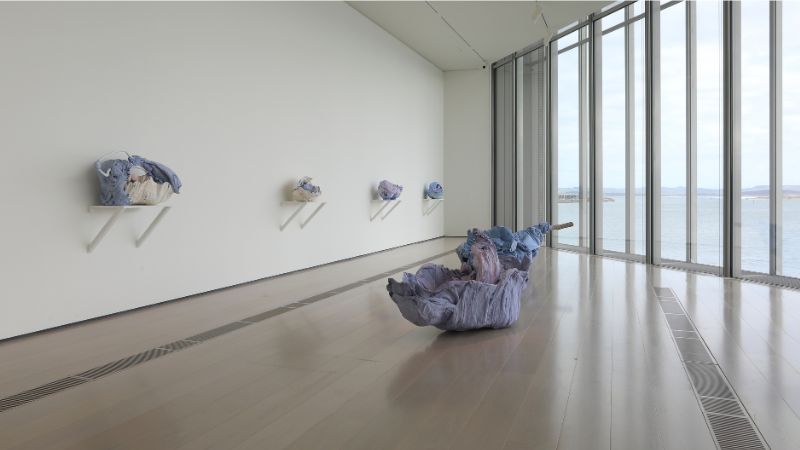
Elena Aitzkoa presents plaster-soaked textile sculptures -“earths” on the floor and suspended “atmospheres”- that translate the landscape of the Sierra de Arrato into an ecosystem of living matter. Sahatsa Jauregi’s circular steel structure, activated by the performance company Tripak, becomes a performative machine that reflects on circular architectures as spaces of encounter and control. Mar Reykjavik experiments with affective translation, using a four-screen film to shift meaning towards sound and emotion while questioning relations of domination between languages. Naomi Rincón-Gallardo’s audiovisual fable takes a figure from the Florentine Codex as its starting point to unfold a world of hybrid creatures and a lesbian genealogy silenced by history. Inmaculada Salinas explores historical ballads about so-called “wicked women”, translating them into series of meticulous drawings that restore movement and voice to narratives fixed by a moralising tradition. Lorenzo Sandoval connects Andalusi irrigation systems with cybernetics by means of a series of sculptures and a film that follows an anthropologist in search of hidden letters about work and slow time. From artist to artist, from work to work, the galleries reveal themselves as a landscape inhabited by multiple voices that extend beyond those of the works’ original creators.
Itinerarios XXXI – Artists
ELENA AITZKOA (Álava, Spain, 1984)
La condición de Tierra, 2026
Recycled textiles, logs, branches, stones, clay, plaster, pigment, and everyday objects
Elena’s practice encompasses sculpture, drawing, poetry, and performance. The artist understands her creations as ecosystems nourished by physical and emotional elements from her surroundings and her own lived experience.
Her sculptures are made primarily from textiles soaked in liquid, pigmented plaster. This process involves passing through different states of matter: what we ultimately see as a solid sculpture exists only because of what came before, when the material was still liquid and malleable. The works also incorporate clay, branches, stones, and everyday objects.
The gallery presents four “earths”, large-scale pieces placed on the floor, and seven “atmospheres” or lighter sculptures hanging on the walls. The “earths” contain other, smaller sculptures within them, forming a diverse ensemble in which the individual and the collective coexist. The “atmospheres”, meanwhile, hang at chest height so that viewers can sense the receptive quality of the air circulating around them.
SAHATSA JAUREGI, (Salvador de Bahia, Brazil, 1984)
La espalda un andamio, 2026
Steel and plastic
Sahatsa’s work begins by observing the characteristics of the objects and people around her and how they relate to one another. In her most recent works, she has incorporated welding and steel, creating sculptures that resemble characters or beings undergoing transformation.
Her proposal for this space consists of a circular steel structure that rotates on its own axis and functions as a performative mechanical organism. It could be understood as the essence of a spectacle contained within a sculpture. The structure is also an unfolding machine capable of complex movements and extensions, whose function is unclear and can only be revealed through use.
The performance company Tripak will activate the work at specific moments during the exhibition. The costumes, designed by the artist Mikel Ruiz Pejenaute, envelop both the performers and the sculpture like a skin.
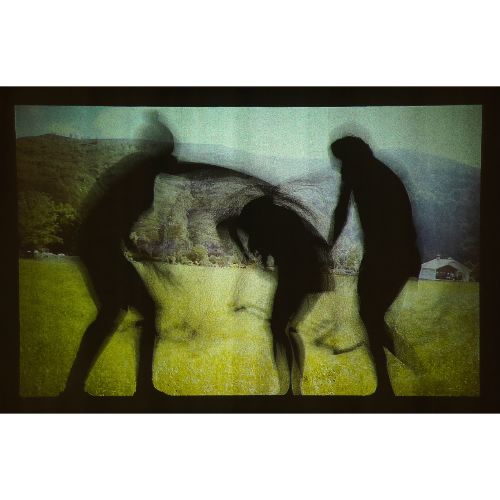
A drawing from an ancient book about the Nahua people of Mexico inspires this video fable. Its protagonist gradually begins to transform into an ant and enters a world of creatures that are part human, animal, plant, or monster.
MAR REYKJAVIK (Valencia, Spain, 1995)
In a train going to Tanto, 2026
Four-channel video installation, 44 min
During the grant period, Mar undertook an artist residency at Index, The Swedish Contemporary Art Foundation in Stockholm. There, she explored “affective translation”, a process that seeks to translate by attending less to the meaning of a text than to its sound, rhythm, and other possible associations.
Shown in this space, In a train going to Tanto is a film projected across four synchronised screens. In it, four people—Carin, Josse, Ofelia, and Dakota—read and perform a script developed around the languages they speak—Swedish, Valencian, English, Spanish, Meänkieli (a language spoken in northern Sweden), and Swedish Sign Language—and through different exercises in “affective translation”.
The script was written in Stockholm in 2025, drawing on these exercises and the different languages used by the participants. The film shows a day of rehearsing and reading the script. It is not a conventional film, where we can also see how it was shot, the atmosphere on set, and the emotions of those involved, all aspects normally kept out of sight in cinema.
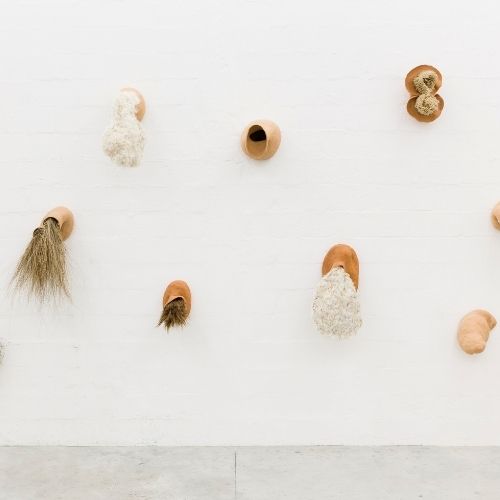
Sculptures made from fabrics soaked in plaster, clay, branches, and stones, which the artist sees as small ecosystems. On the floor are four large “earths” containing other pieces within them, while seven lighter “atmospheres” hang on the walls at chest height.
NAOMI RINCÓN-GALLARDO (North Carolina, USA, 1979)
Hormiguero Patlache, 2026
HD video, 21 min 17 sec.
Watercolours on paper. Iron and clay
Naomi’s practice combines performance, video, music, props, and fiction to explore questions of colonialism, gender, and memory.
Patlache Ant Nest is an audiovisual fable that takes as its starting point the image and description of a figure called “patlache” in the Florentine Codex, an encyclopaedic work on the society and culture of the Nahua peoples of central Mexico, produced in the sixteenth century by the friar Bernardino de Sahagún together with Indigenous Nahua scribes and informants.
In the video, two characters inspired by this image from the codex enter a world of creatures that go beyond the human and merge with animals, plants, and the monstrous, drawing on the powers of Mesoamerican deities.
A fiction film and seven sculptures connecting the water and allotments of the ancient Andalusi world with today’s machines and circuits. We follow Fátima, a Moroccan anthropologist travelling through southern Spain and Morocco in search of traces of ancient irrigation systems.
INMACULADA SALINAS (Seville, Spain, 1967)
Si os dan papel pautado, escribid por el otro lado, 2025
Drawings, photographs from family albums, and printed images
Painting and systematic drawing are tools for reflection in Inmaculada’s practice, characterised by extensive series using photographs, texts and, above all, meticulous drawings built up from repeated patterns.
During the grant period, Inmaculada researched ballads about so-called “wicked women”, which for centuries taught people what a woman should not be, revealing the lack of opportunities, autonomy, and voice in these women’s lives. For the artist, drawing these texts is a form of listening and making room for voices that had been reduced to a moral warning, allowing their stories to be transformed.
The works in the resulting series take some of their titles from these Spanish ballads—La infanta preñada, Las novias, La serrana de la Vera, Las guerras, Casimira Valletón, Las sombras—and contain images inherited from history: engravings from old encyclopaedias, scenes of war, and family photographs. Cutting them out and rearranging them does not correct the past, but restores movement to something that had become fixed.
Four people read and rehearse a script in six different languages, translating through sound and rhythm rather than meaning. The film, shown on four screens simultaneously, also reveals how it was made and how the participants feel.
LORENZO SANDOVAL (Madrid, Spain, 1980)
Shadow Writing (Water Patterning), 2026
4K video, stereo, 45 min
Industrial enamel and screen printing on stainless steel, ceramics, orange blossom essence, and textiles
Lorenzo’s research for the grant uses the idea of the circuit to connect irrigation systems of Andalusi origin with the history of cybernetics—the study of control and communication systems.
The artist presents a series of seven sculptural elements that correspond to the seven chapters of a film also shown in this space. These elements bring together diagrams and illustrations relating to the history of water use and the agricultural landscape of the “huertas”. Each of them also includes a ceramic piece made in collaboration with Fundación Fajalauza and textiles produced with Zineb Achoubie.
The fictional film follows the journey of Fátima, a Moroccan anthropologist searching for architectural references on irrigation-channel systems through the south of the Iberian Peninsula and Morocco. Among the elements she studies are the illustrations of waterwheels from the Hadīth Bayāḍ wa Riyāḍ, a twelfth-century illustrated manuscript written during the Andalusi period.
Drawings, photographs from family albums, and historical images that give a voice to the “wicked women” of traditional ballads; stories that for centuries served only as warnings about what a woman should not be. By drawing and rearranging these images, the artist listens to these women and frees them from that role.
—
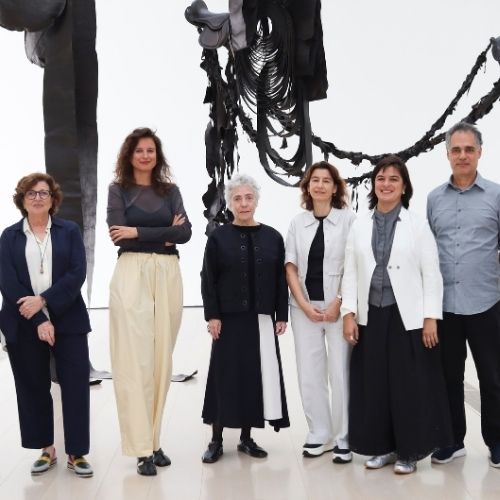
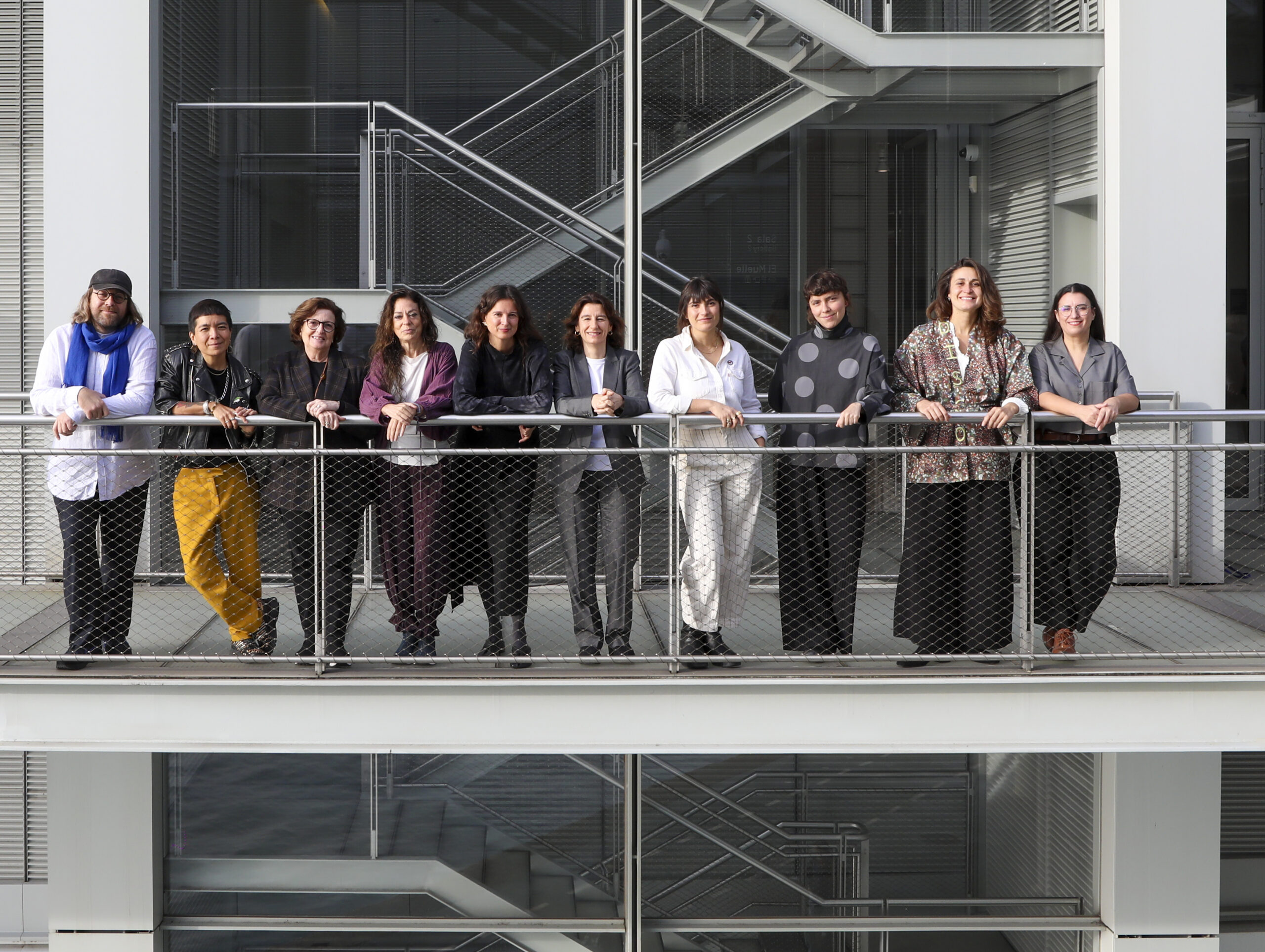
Photo caption, from left to right:
Lorenzo Sandoval, artista, Naomi Rincón-Gallardo, artista, Begoña Guerrica-Echevarría, directora del departamento de Arte del Centro Botín, Inmaculada Salinas, artista, Bárbara Rodríguez Muñoz, directora de exposiciones y de la colección del Centro Botín, Fátima Sánchez, directora ejecutiva del Centro Botín, Sahatsa Jauregi, artista, Mar Reykjavik, artista, Elena Aitzkoa, artista, y Laura Vallés, miembro del jurado de becas.
Photographer: Belén de Benito