CENTRO BOTIN PRESENTS ‘WAVES LOST AT SEA,’ A NEW EXHIBITION OF WORK BY ARTIST PRACTICE COOKING SECTIONS
- Opening 18 October 2025 – 1 March 2026, Centro Botín presents a significant new performative and musical installation by London-based artist practice Cooking Sections, marking their first exhibition in Spain.
- Building on Cooking Sections’ widely acclaimed practice highlighting the impact of human activity on planetary and human health, the exhibition explores the global disappearance of waves driven by human activity.
- Entitled Waves Lost at Sea, the exhibition traces the stories of 11 unique waves and explores how activity such as dredging, sand mining and coastal construction has reshaped shorelines and altered sea-beds, impacting and erasing waves around the world.
- The installation will be continuously activated by choreographed performers in the space, accompanied by 11 new evocative musical compositions by artist and musician Duval Timothy. Translating the stories, rhythms and patterns of each of these lost waves, the performative installation will create a haunting tribute.
- Centro Botín continues its commitment to promoting the collaboration between artists and the local community, in this case, Cooking Sections has worked with the GeoOcean Department at the University of Cantabria to identify and “read” the waves.
Centro Botín presents Waves Lost at Sea, the first exhibition in Spain of Cooking Sections, an artist practice based in London and founded by Daniel Fernández Pascual & Alon Schwabe. They are internationally renowned for their long-term engagement with ecology, food systems and climate change using a metabolic perspective, this is, understanding the Earth as one big chain of chemical reactions among organisms that digest one another. Collaborating with scientists, chefs, biologists, farmers and civic society at large, the artists make visible how human activity is deteriorating planetary and human health, while proposing regenerative cultural and agricultural models.
Waves Lost at Sea is conceived as a performative and musical installation that traces the global disappearance of waves driven by human activity. Waves are energy moving across vast oceans, between air, water and shore. They form in the open sea, but it is on their arrival—when they meet sandbars—that they break to take shape, sculpting their celebrated forms. Coastal communities have long learned to read these waves, for navigation, nourishment or surfing. Dredging, sand mining, port expansion and coastal construction has reshaped shorelines and altered sea-beds, resulting in waves vanishing across the globe. The disappearance of a wave is not just the loss of a break; it is the loss of an ecological landscape and cultural history.
Working in collaboration with the GeoOcean Department at the University of Cantabria, Cooking Sections have identified and “read” 11 specific waves: each with their own name, unique pattern and life story. From Mundaka’s sandbar in the Cantabrian Sea, to El Marsa’s phosphate port in Western Sahara or apartheid-era beach resorts in Cape St. Francis, South Africa, these episodes reveal the socio-ecological toll of disrupted ecosystems. Elsewhere, breakwaters, canals, sea defences, and second homes have erased waves such as La Barre (Bay of Biscay, Northeast Atlantic Ocean); Kirra (Kurrungul, Coral Sea, Southwestern Pacific Ocean); Ala Moana (Hawai’i, North Pacific Ocean); Petacalco (Guerrero, Northeast Pacific Ocean); Cabo Blanco (Piura, Southeast Pacific Ocean); Agadir (Souss Massa Drâa, Northeast Atlantic Ocean) and Rabo de Peixe (Azores, North Atlantic Ocean), eroding the livelihood of coastal communities and forcing the migration or disappearance of species.
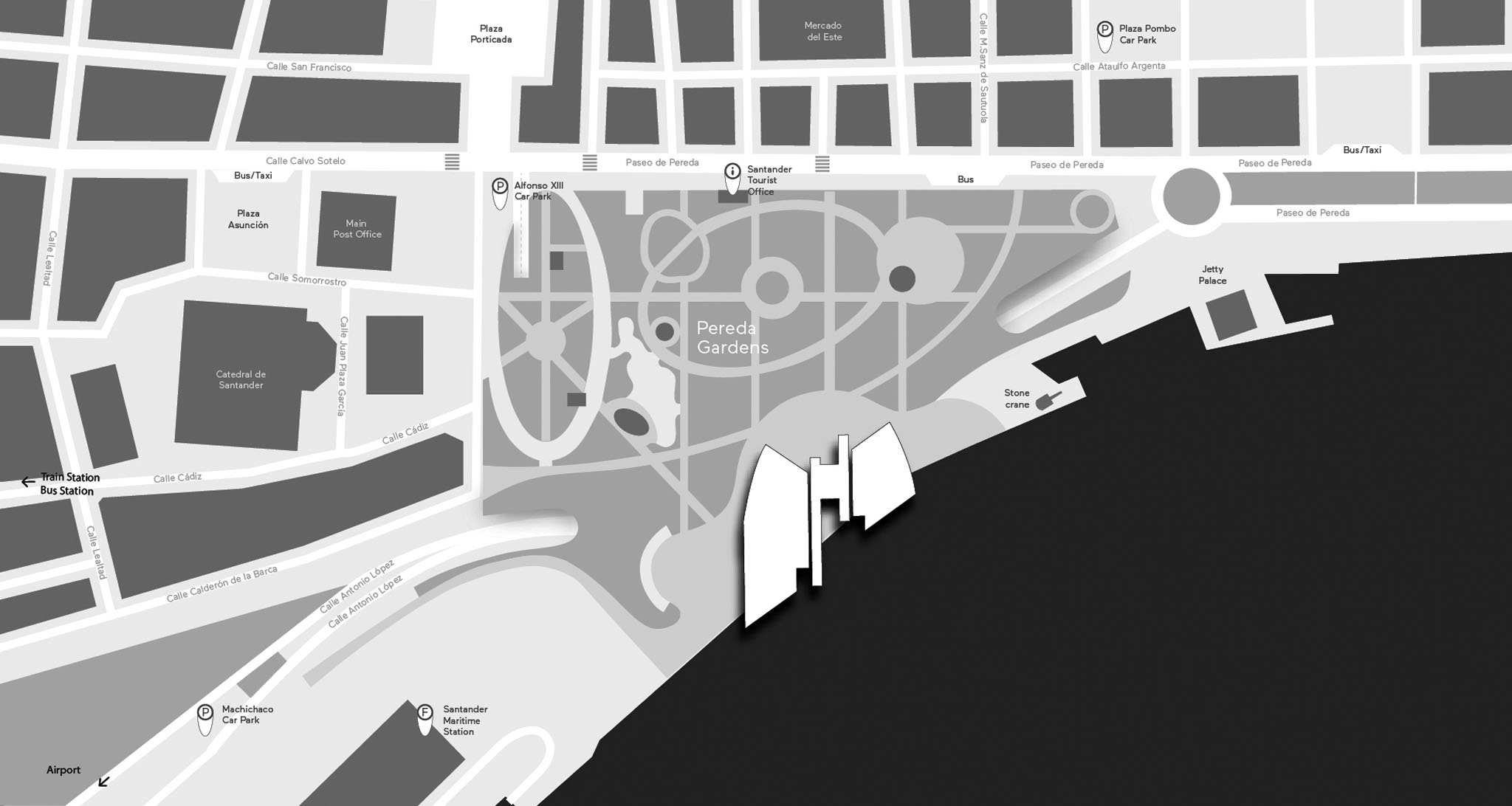
Working closely with Cooking Sections, artist and musician Duval Timothy has translated the stories, rhythms and patterns of each wave into 11 evocative musical compositions. These scores are in turn translated into movements by performers as they continuously activate a choreography developed by the artists. The open and expansive gallery space on the second floor at Centro Botín – located between the Bay and the Cantabrian Sea – becomes a haunting tribute to these lost waves, where visitors can see and hear how they moved and how they vanished, while reflecting on what still can be protected.
Bárbara Rodríguez Muñoz, Director of Exhibitions and the Collection at Centro Botín commented: “In the face of ecological loss, Cooking Sections create a tribute to natural entities, the vanishing waves, updating the traditional human-centric concept of a monument. The gallery space becomes a celebration to the abundance of nature and also mourns its depletion through movement and music, which will ripple in the bodies and imagination of our visitors.”
Cooking Sections commented: “To read wave disappearance is to trace the forces reshaping our coasts, such as dredging, extraction, and climate breakdown; and to recognise that each vanished wave leaves an imprint behind: a scar on the seabed, a history of loss. We hope that this exhibition awakens people to protect coastal habitats and ecosystems.”
Waves Lost at Sea expands on Cooking Sections’ research and work on tidal zones across the years, which spans from the isles of Skye and Raasay, where the artists have been collaborating with local communities to divest from salmon farming; to Louisiana, where they playfully brought hidden narratives around extraction to the surface through reading oyster shells as the palm of a hand. The exhibition builds on the workshop led by Cooking Sections and organised by Fundacion Botín in September 2024, which took place in Santander and the Nansa Valley in Cantabria and engaged a group of artists, researchers and biologists to read the traces that human activity leaves on local ecosystems.
The installation is accompanied by an English/Spanish catalogue co-published by Fundación Botín and Spector Books. Edited by Amy Sherlock, it offers an in-depth exploration of their critical spatial practice over the last decade through six newly commissioned essays by Nerea Calvillo, Sria Chatterjee, Ros Gray, Yayo Herrero, Theodossis Issaias, Mari Margil, alongside a series of images with annotated captions by the artists. The volume re-narrates and reflects on more than twelve years of Cooking Sections’ praxis in the face of climate and ecological crisis.
Notes for Editors
- Curator: Bárbara Rodríguez Muñoz
- Wave research collaboration: GeoOcean, Universidad de Cantabria (Fernando Javier Méndez Incera, Jared Ortiz-Angulo Cantos, Gabriel Bellido Prieto, Laura Cagigal Gil)
- Structural engineering: Manja van de Worp
- Music: Duval Timothy
- Cooking Sections studio team: Max Cooper-Clark, Rosa Whiteley, Sofía Yáñez Perteagudo